Give Parcels a Clear Next Step
Regional hubs sort by postcode district; neighbourhood hubs sort down to the specific stairwell, cargo-bike pannier, and drop sequence. Hardware must match the packaging mix without hogging the floor.
The Packaging Shift That Broke Traditional Rollers
Ten years ago, corrugated cardboard boxes represented over 70% of urban parcel volume. Today, limp low-density polyethylene (LDPE) poly-mailers, padded kraft envelopes, and shrink-wrapped apparel packets often exceed 55% of the morning induction stream. Standard unpowered gravity rollers with 50mm axle pitch trap thin mailers between rollers, causing jam cascades that force operators to halt the induction belt.
Inside a local depot handling 1,200 to 4,500 parcels per morning wave, the sortation system has one overarching goal: translate mixed bulk cages into 20 to 45 route-specific containers while verifying dimension, weight, and barcode readability in a single touch.
Three Sorting Architectures for Compact Footprints
Selecting sorting equipment for a 300-square-metre micro-hub requires trading off capital cost, floor permanence, and throughput per square metre:
- Expandable Gravity Roller + Wearable Ring Scanners (400–900 parcels/hr): Zero fixed footprint when collapsed. An inducter pulls parcels from cages, scans with a Bluetooth ring trigger, and reads a two-digit route code flashed on a wrist display or smart-glass HUD. Operators walk minimal steps along a herringbone arrangement of 16 to 24 open delivery bags.
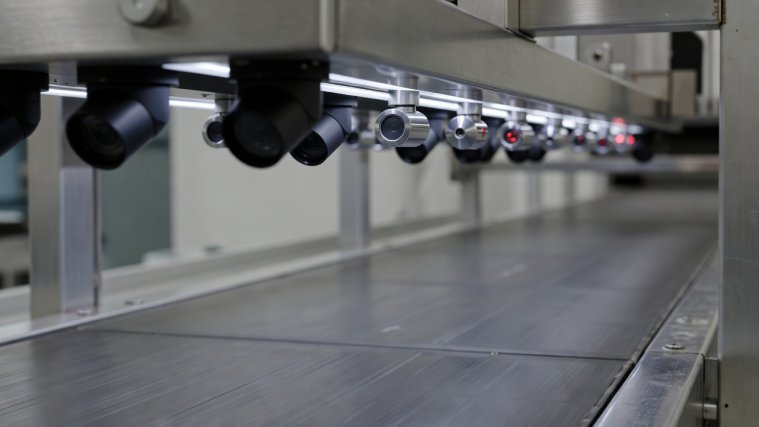
- Modular Swivel-Wheel Sorter Spine (1,200–2,800 parcels/hr): A narrow 600mm-wide belt feeds pneumatic or 24V electric pop-up wheel tables (such as Interroll or Itoh Denki modules). Overhead six-sided camera tunnels read GS1-128 or 2D DataMatrix labels at 1.2 metres per second, kicking parcels left or right down 22-degree UHMW-PE lined chutes directly into open totes.
- Autonomous Mobile Robot (AMR) Table Deck (1,500–3,500 parcels/hr): Compact tilt-tray robots circulate on a portable raised platform over staging cages, dropping small packets through floor apertures into bags below. High spatial efficiency, though heavy out-of-gauge items (>12 kg) must bypass to a manual ugly-freight lane.
Chute Geometry and Bag-Loading Ergonomics
A sorting chute that dumps parcels onto the floor creates a second manual handling step. Well-engineered urban chutes terminate at 720mm above floor level—matching the rim height of standard 600×400mm Euro totes or rigid cargo-bike liner bags resting on tilted roller stands. A 24-degree slide angle coated in low-friction ultra-high-molecular-weight polyethylene ensures both waxed cardboard and high-friction recycled paper mailers slide cleanly to the buffer stop without crushing fragile cartons at the bottom.
| Sort Method | Throughput (PPH) | Floor Footprint | Poly-Mailer Reliability | Relocation Time |
|---|---|---|---|---|
| Manual Ring-Scan + Put-Wall | 350–500 per operator | 18–28 m² | High (manual placement) | Under 2 hours (castor racks) |
| Telescopic Roller + Voice/Light | 750–1,100 (3-person team) | 35–50 m² (collapses to 12 m²) | Medium (needs tight 28mm pitch) | Immediate (fold after wave) |
| Modular Pop-Up Wheel Sorter | 1,500–2,600 | 55–85 m² fixed | High (if min weight > 100g) | 2–4 days (bolted modular frames) |
| Bench-Top AMR Tilt-Tray | 1,800–3,200 | 45–70 m² deck | Very High (gravity drop) | 1–2 days (modular deck tiles) |
LIFO Bag Packing and Cube Utilisation
Sorting into a route chute is only half the task. If a cargo-bike rider reaches their first stop on a rainy high street and has to dig to the bottom of a 350-litre container to find Stop #01, kerb dwell time doubles. Local hubs use a secondary "fine-sort" shelf at the base of each chute: during the final twenty minutes of the wave, the rider or loader places stops 25 through 40 in the bottom tier of the tote, and stops 01 through 24 on the top shelf. See how these sequence decisions hold up against real traffic in Work With the Street.