Keep the Local Picture Current
A digital twin is only as accurate as the last physical scan on the depot floor. Without strict parent-child binding between parcel labels, tote licence plates, and bay locations, local hubs go blind during peak waves.
Closing the "Black Hole" Between Arrival and Dispatch
In many last-mile networks, visibility evaporates for three hours every morning. The regional linehaul manifest registers as "Arrived at Local Hub" at 05:15, and the next public event is "Out for Delivery" at 08:45. Inside the building, however, a lot can go wrong in those 210 minutes: a parcel slips behind a chute skirt, gets dropped into Route 14's bag instead of Route 12's, or arrives damaged with a leaking detergent bottle inside the same roll-cage.
Keeping the local picture current requires three non-negotiable internal state transitions captured via GS1 Serial Shipping Container Codes (SSCC) and local License Plate Numbers (LPNs):
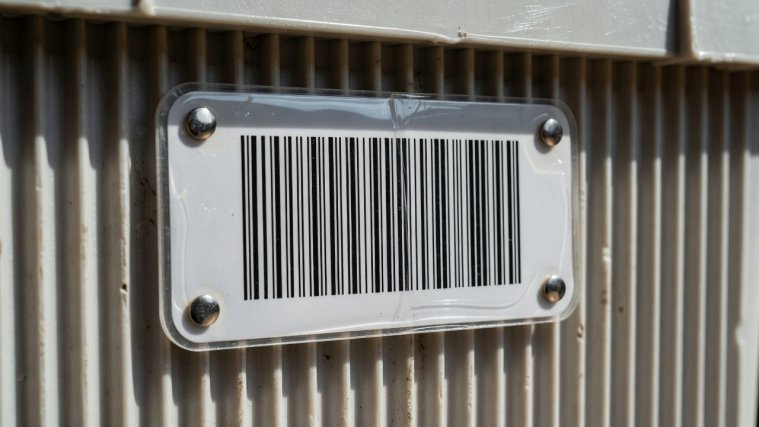
- Inbound Cage Acquittal: Scanning the master SSCC barcode on the roll-cage placard as it crosses the tail-lift threshold. This proves the cage physically arrived on that specific feeder truck rather than being left on the regional cross-dock apron.
- Sortation Marriage Scan (Item-to-Tote): As the operator drops the parcel from the chute into a route bag or tote, a rapid dual-scan (parcel barcode → fixed tote barcode) binds the item to that physical container.
- Container-to-Vehicle Load Scan: Rather than re-scanning 95 individual parcels at the cargo-bike bay, the rider scans three tote LPNs, instantly transferring custody of all 95 nested items onto their route manifest.
Exception Cages and "Hospital Bay" Discipline
Roughly 1.5% to 3% of inbound parcels trigger an exception during morning sortation: torn thermal labels, address queries (missing flat number), customer mid-flight redirection to a parcel locker, or damaged outer cartons. If handlers leave these problem parcels sitting on top of the conveyor frame, they inevitably get swept into the wrong route or forgotten until the afternoon shift.
Every well-run micro-hub establishes a clearly marked Hospital Cage equipped with a label reprint station, digital scale, and over-bagging sealer. The moment an unreadable or damaged parcel is pulled from the belt, it receives an "EX-HOLD" location scan tied to a numbered pigeonhole on the hospital rack.
| Capture Technology | Best Use Case in Hub | Read Speed | Unit Hardware Cost | Operational Trade-off |
|---|---|---|---|---|
| Wearable Bluetooth Ring Scanner | Manual cage break & bag marriage | 0.4s / scan | Low (£350–£600) | Requires operator trigger discipline on every item |
| Overhead 2D Image Camera Portal | Belt induction & auto-divert confirmation | Up to 2,800 pph | Medium (£6k–£14k) | Cannot see labels facing downward onto belt |
| Passive UHF RFID Dock Portal | Tracking reusable roll-cages & returnable totes | Bulk (30 tags/sec) | Medium (£4k–£8k) | Foil-lined thermal packaging can detune RF signal |
| BLE Active Asset Beacons | Swappable cargo-bike container pods | Continuous zone ping | Low (£18–£35/pod) | Battery replacement cycle every 24–36 months |
Evening Reverse Reconciliation: Returns and Re-Attempts
When riders return between 17:00 and 19:30, they bring back two distinct streams: customer e-commerce returns collected at the doorstep or local parcel shop, and undelivered "Not-At-Home / Access Blocked" parcels requiring next-day re-attempt. Mixing these two streams on the evening apron guarantees that a next-day re-attempt gets accidentally shipped back to the regional returns centre.
To prevent cross-contamination, returning couriers pass a two-bin check-in desk: purple totes for outbound reverse linehaul (consolidated onto the 21:00 empty cage collection truck), and amber totes for local hold-for-redelivery stock that remains locked inside the micro-hub overnight. Have specific questions on how these workflows scale? Visit Last-Mile Unknowns.